
Stairs are the hardest-working, highest-risk, and most overlooked surface in most homes. Every trip between floors lands on the same 13 or 14 treads, concentrated on the same few inches at the front edge of each step — the nose. Stairs are also where falls happen, where flooring warranties quietly add exclusions, and where installation is priced by the step instead of by the square foot. A product that performs beautifully across a living room can wear out, sound hollow, or turn slippery on a staircase.
This guide compares the three most common choices for interior stairs — carpet, hardwood, and luxury vinyl plank — plus the stair runner, which combines the best of two of them. It covers safety, durability, noise, cost per step, and the details that separate a staircase that looks finished from one that looks like an afterthought.
Why Stairs Play by Different Rules
-
-
- The nose takes the abuse. Feet pivot and push off the front edge of each tread, so stairs show wear years before the rest of the floor does.
- Safety comes first. Stairs are where household falls happen, so traction, visibility, and consistent steps matter more here than anywhere else in the house.
- Labor is per step. Every tread and riser is measured, cut, and fit individually, which is why stair work is quoted per step rather than per square foot.
- Warranties change. Some flooring products carry reduced coverage on stairs, or none at all unless the manufacturer’s matching stair components are used.
- Height changes matter. Adding flooring thickness to the treads changes the height of the first and last steps. Residential building code limits the difference between the tallest and shortest riser in a flight to 3/8 inch, so thicker products need planning at the top and bottom of the run.
-
Carpet on Stairs: Quiet, Safe, and Affordable
Carpet is still the most common stair covering in Portland-area homes, and for good reason. It offers the best traction of any option, absorbs the sound of footsteps, softens the consequences of a slip, and is the least expensive way to finish a staircase. For homes with young children, older adults, or dogs that take the stairs at full speed, those advantages are hard to beat.
The trade-off is wear. Stair carpet typically shows wear at the nose before anything else in the house, and it’s harder to keep clean than a hard surface. The right specification makes a big difference:
-
-
- Choose a dense, lower-profile carpet. Tight-twist cut pile or a dense frieze holds up best. Tall, plush carpet feels luxurious in a bedroom but crushes and flattens quickly over a stair nose.
- Be cautious with loop pile. Berber and other loop styles can “grin” at the nose — the bend opens the loops and shows the backing — and pet claws can snag and pull loops on stairs.
- Use a firm, dense pad. Stairs call for a thinner, denser cushion than bedrooms. A thick, soft pad lets the carpet flex over the nose and wear through faster. Follow the carpet manufacturer’s pad requirements for stairs.
- Pick the installation style. A waterfall install runs carpet from the nose straight down to the next tread and is the quicker, less expensive option. A cap-and-band (or “Hollywood”) install wraps the carpet tightly around and under the nose for a crisper, tailored look.
- Plan for the stairs to wear first. If you’re carpeting the whole floor, consider keeping extra carpet on hand so the stairs can be redone later in a matching color.
-
For more on fiber, density, and pile choices, see our carpet buyer’s guide.
Hardwood Stairs: The Resale Favorite
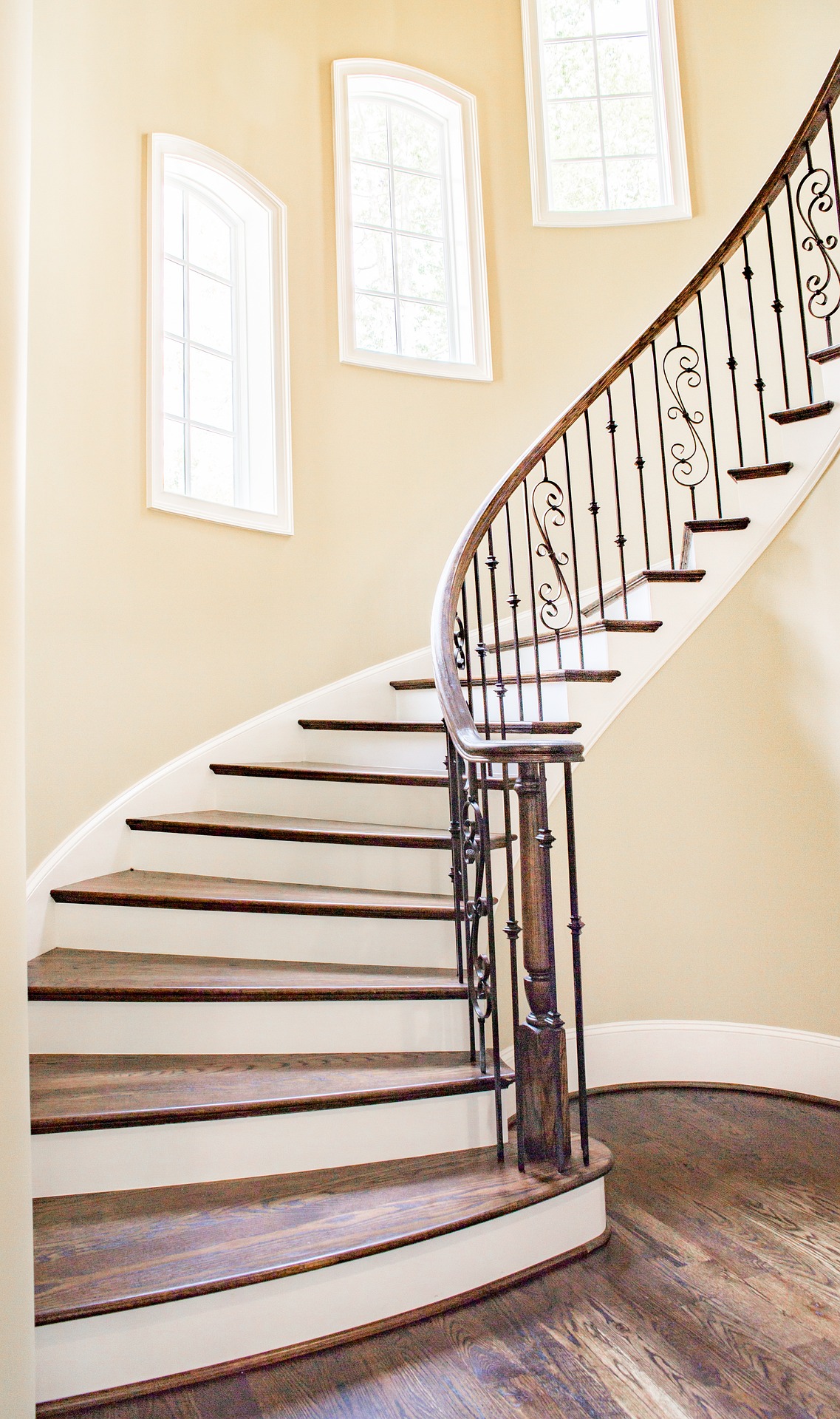
Hardwood stairs are a showpiece, especially in open floor plans where the staircase is visible from the main living area. They’re durable, can be sanded and refinished like any hardwood floor, and consistently appeal to buyers. Solid oak treads paired with painted white risers remain one of the most requested looks in both new construction and remodels.
The challenges are traction and noise. Finished hardwood is slippery in socks, and footsteps on hard treads carry through the house. A matte or satin finish helps with grip, and a runner (covered below) addresses both issues.
There are three common paths to hardwood stairs:
-
-
- Refinish what’s there. Many older Portland homes have solid oak or fir treads hiding under carpet. If the treads are in good condition, sanding and refinishing is often the least expensive route to hardwood stairs. Check first: many newer homes were built with “carpet-grade” stairs — pine or composite treads that were never meant to be seen.
- Retrofit treads. Pre-made cap treads and risers install over the existing stairs after the old overhanging nose is trimmed back. This is the most common way to convert carpeted stairs in newer homes, and it avoids rebuilding the staircase.
- Replace with full-thickness treads. Removing the old treads and installing new solid treads produces the best result, especially for open stairs where the side of each tread is visible.
-
Matching stair treads to a new hardwood floor is easiest when they’re selected together, since stain on solid treads and the factory finish on flooring can look different side by side. Our hardwood buyer’s guide covers species, grades, and finishes in detail.
Luxury Vinyl Plank on Stairs: The Details Decide
When the main floor is luxury vinyl plank, carrying it up the stairs creates a continuous, coordinated look, and LVP’s water and scratch resistance are welcome on stairs that see wet boots and dog nails. It’s a popular choice, but it’s also the stair option where shortcuts show most clearly.
-
-
- Use the manufacturer’s matching stair nose. Plank flooring can’t simply be bent over the edge of a step. Each tread needs a stair nose molding, ideally the flush style made for that exact product and color. Order the nosing at the same time as the flooring so it comes from the same production run.
- Glue it down. LVP is usually floated on floors, but on stairs the treads, risers, and nosing are fully adhered. A floating plank on a stair tread will move and fail.
- Check the warranty. Confirm the product is approved for stair installation and which components are required to keep coverage in place.
- Watch the nose. The joint between the nose molding and the tread is the weakest point of an LVP staircase. Tight, flush joints and full adhesion are what separate a durable staircase from one that starts lifting at the edges.
- Consider one-piece treads. Some manufacturers offer LVP stair treads with an integrated nose, which eliminates that joint and gives a cleaner look. Availability varies by product line.
-
See our LVT buyer’s guide for wear layer and core recommendations. On stairs, a thicker wear layer is worth the upgrade.
Stair Runners: The Best of Both
A runner is a strip of carpet installed down the center of a hardwood staircase, leaving the wood exposed on each side. It’s one of the most effective stair upgrades available: the runner adds traction and quiets footsteps, while the exposed wood keeps the staircase looking finished.
-
-
- Width: on a standard 36-inch staircase, a runner of roughly 27 to 30 inches leaves an even border of wood on each side.
- Material: dense, low-profile carpet or a flat weave holds its shape best on stairs. Patterned runners add character and hide wear.
- Installation: the runner is fastened tightly to each tread and riser over a thin, firm pad. Decorative stair rods are optional and purely cosmetic on a properly secured runner.
- Flexibility: a runner can be replaced on its own when it wears or tastes change, without touching the stairs underneath.
-
Tile and Stone on Stairs
Tile on interior stairs is less common, but it works well for entry steps, sunken rooms, and short runs into a tiled area. Use a slip-resistant finish and matching bullnose or stair-nose pieces rather than leaving a cut tile edge at the front of the step. For exterior stairs and covered entries, frost-resistant porcelain with a high slip rating is the right choice in our wet climate.
Safety Details Worth Getting Right
- Consistent steps. Every tread depth and riser height in a flight should match. Inconsistent steps are a common cause of trips, and new flooring that changes the top or bottom step height has to be accounted for.
- Visible edges. A nose that contrasts slightly with the tread helps the eye find the edge of each step, which matters more as people age and in low light.
- Traction. Carpet and runners offer the most grip. On hard surfaces, choose matte finishes and textured LVP over glossy products.
- Secure everything. Loose nosing, a shifting runner, or carpet pulling away at the nose are hazards. Have them fixed right away.
- Light and handrails. Good lighting at the top and bottom of the stairs and a sturdy handrail do as much for stair safety as any flooring choice.
Choosing the Right Stair Flooring for Your Household
-
-
- Young children or older adults: carpet, or hardwood with a runner, for traction and softer landings
- Pets: carpet or a runner gives dogs better footing; if you choose LVP, pick a textured, matte finish
- Open floor plan or an upcoming sale: hardwood treads with painted risers, adding a runner if grip or noise is a concern
- LVP main floor: matching LVP with the manufacturer’s flush stair nose, fully glued down
- Tight budget: quality stair carpet now, with the option to convert to hardwood treads later
-
For more on households with pets and kids, see The Best Flooring for Homes with Pets and Kids.
Common Questions
Can you put luxury vinyl plank on stairs?
Yes, as long as the product is approved for stairs and installed correctly: fully glued down, with the manufacturer’s matching stair nose on every tread. Floating LVP on treads and improvised nosing are the most common causes of failure.
Should my stairs match my floors?
Not necessarily. Matching creates a seamless look in open floor plans, but contrasting stairs — hardwood treads with painted risers, or a carpeted staircase next to a hard-surface floor — are just as common. What matters most is that colors and undertones work together and the transitions at the top and bottom are clean.
Is carpet or hardwood safer on stairs?
Carpet provides more traction and a softer landing, which is why it’s often recommended for homes with young children, older adults, or pets. Hardwood with a securely installed runner offers similar grip while keeping the look of wood.
How long does it take to install stair flooring?
A standard staircase can usually be carpeted in a few hours to a day. LVP stairs typically take one to two days because each tread and nose is fit and glued individually. Hardwood treads take longer, especially if they’re stained and finished on site, and the stairs may be off-limits while the finish cures — so plan for access between floors.
Find the Right Stair Flooring at Trinity Flooring
Stairs are one of the most visible parts of a home and one of the most demanding to get right. Our Portland showroom has stair-ready carpet, hardwood treads, LVP with matching stair nose, and runner options, and our team can help you choose a look that coordinates with the rest of your floors and suits the way your household uses the stairs.
Visit us to compare samples in person, or contact us to schedule a free in-home measurement and estimate.