
Walk into any flooring showroom asking for “a wood look” and you’ll be steered toward three very different products: luxury vinyl plank, laminate, and real hardwood. From six feet away, good versions of all three can be nearly indistinguishable. Up close — and over ten years of real life — they behave very differently.
Each of these products is the right answer for somebody. This comparison lays out exactly where each one wins, where each one loses, and how to match the choice to your home, budget, and tolerance for maintenance.
The Three Contenders, Briefly
-
- Luxury Vinyl Plank (LVP): A fully synthetic, multi-layer product — a photographic wood image under a clear wear layer, over a PVC or stone-composite core. Waterproof by construction.
- Laminate: A photographic wood image under a hard melamine wear surface, bonded to a high-density fiberboard (HDF) core. The surface is extremely hard; the core is wood-based and moisture-sensitive.
- Hardwood: Real wood, either solid or engineered (a real wood veneer over a plywood core). The only one of the three whose surface is the actual material it appears to be.
Round 1: Water Resistance
This is the most decisive difference among the three, so it goes first.
LVP wins outright. The plank itself is impervious to water — a spill, a pet accident, or a wet mopping simply cannot swell or damage it. Quality rigid core products are appropriate for kitchens, bathrooms, laundry rooms, and basements.
Laminate is the most vulnerable. Its hard surface repels casual splashes, but water reaching the seams wicks into the HDF core and swells it permanently. “Water-resistant” laminates have improved edge sealing and give you more cleanup time, but the core chemistry hasn’t changed — a real water event still ends badly. Keep laminate out of full bathrooms and be cautious in kitchens.
Hardwood sits in between. Wood tolerates humidity swings (engineered better than solid) and promptly-wiped spills, but standing water causes cupping and staining. The difference from laminate: moderately water-damaged hardwood can often be sanded and refinished, while swollen laminate is finished.
Round 2: Durability and Everyday Wear
Laminate has the hardest surface of the three — its melamine wear layer resists scratching better than almost anything residential. For pure scratch resistance in a dry room, laminate genuinely leads.
Quality LVP is close behind. A 20-mil wear layer handles pet nails, chair legs, and traffic extremely well, and it has an advantage laminate lacks: it dents and deforms less visibly under impact, and damaged planks in a floating installation can be individually replaced.
Hardwood is the softest surface of the three and will scratch and dent — hard species, wire-brushed textures, and matte finishes minimize how much it shows. But hardwood holds a card the other two can never play: it’s renewable. A refinish erases a decade of wear entirely. LVP and laminate wear in one direction only.
Round 3: Appearance and Feel
Honest assessment: hardwood still wins on realism, because it isn’t imitating anything. The depth, variation, and way real wood ages have no true substitute, and buyers can feel the difference underfoot and hear it in the sound of footsteps.
That said, the gap has narrowed dramatically. Premium LVP with embossed-in-register texturing (where the surface texture aligns with the printed grain) is remarkably convincing, and modern printing avoids the pattern repetition that gave older products away. Laminate imaging is similarly strong at the top of the market, though its sound underfoot — a harder, hollower tap — is the most common giveaway. Quality underlayment substantially improves the acoustics of both floating products.
Round 4: Resale Value
Real hardwood remains the flooring that listing agents lead with, and it’s the only one of the three that buyers consistently treat as a premium feature rather than a neutral one. In Portland’s older housing stock especially, hardwood aligns with what buyers expect the home to have.
Quality LVP has become fully accepted — buyers recognize it, understand its practicality, and don’t discount for it the way they once discounted vinyl. Laminate is the most neutral-to-negative of the three at resale, largely on reputation from older generations of the product. None of this makes hardwood automatically the right call — a hardwood floor destroyed by the family dog helps resale less than a pristine LVP floor — but all else equal, wood carries the premium.
Round 5: Maintenance and Comfort
-
- LVP: easiest of the three. Sweep and damp mop. No refinishing, no special products, no humidity anxiety. Slightly softer and warmer underfoot than laminate.
- Laminate: nearly as easy day-to-day, but requires more caution with wet mopping — excess water at the seams is the enemy. Hardest and coldest feel of the three without quality underlayment.
- Hardwood: modest routine care (dry methods plus recommended cleaner), but it asks for a stable indoor humidity range and periodic recoating or refinishing over its life. In exchange, it’s the most comfortable, warmest, and quietest surface here.
The Verdict: Match the Floor to the Situation
There’s no universal winner — there are right answers for specific situations:
-
- Busy family home, pets, moisture exposure anywhere: LVP with a 20-mil wear layer. This is the most forgiving floor made, and it’s why it dominates the market.
- Maximum long-term value in a home you’ll keep: hardwood — engineered for most modern homes, solid where subfloor and budget allow. Nothing else appreciates the way wood does over decades.
- Tight budget, dry rooms, low moisture risk: laminate delivers a hard, handsome surface for the least money. Bedrooms, offices, and upper-floor living areas are its natural territory.
- Rental properties: LVP, almost without exception. Waterproof, plank-replaceable, tenant-proof.
- Resale preparation on older Portland homes: refinish existing hardwood if it’s present; otherwise mid-range LVP in a neutral oak tone.
Common Questions
Is laminate obsolete now that LVP exists?
Not obsolete — repositioned. Laminate still wins on surface hardness per dollar in dry rooms, and modern water-resistant versions have closed part of the gap. But for whole-home installations that include kitchens and baths, LVP’s waterproof construction makes it the safer default, which is exactly how the market has voted.
Can you tell LVP from real hardwood once it’s installed?
At the premium end, most visitors can’t from standing height. The tells are up close: repeating grain patterns on lower-end product, the sound underfoot, and edge profiles. If being indistinguishable matters to you, invest in embossed-in-register texture and longer plank formats, which reduce visible repetition.
Which is best over concrete slab?
Rigid core LVP is the most forgiving over slab — waterproof and tolerant of minor moisture vapor with the right underlayment. Engineered hardwood works over slab with proper moisture testing and mitigation. Solid hardwood and standard laminate are the riskiest choices over concrete and generally need additional moisture protection or should be avoided.
Compare All Three Side by Side at Trinity Flooring
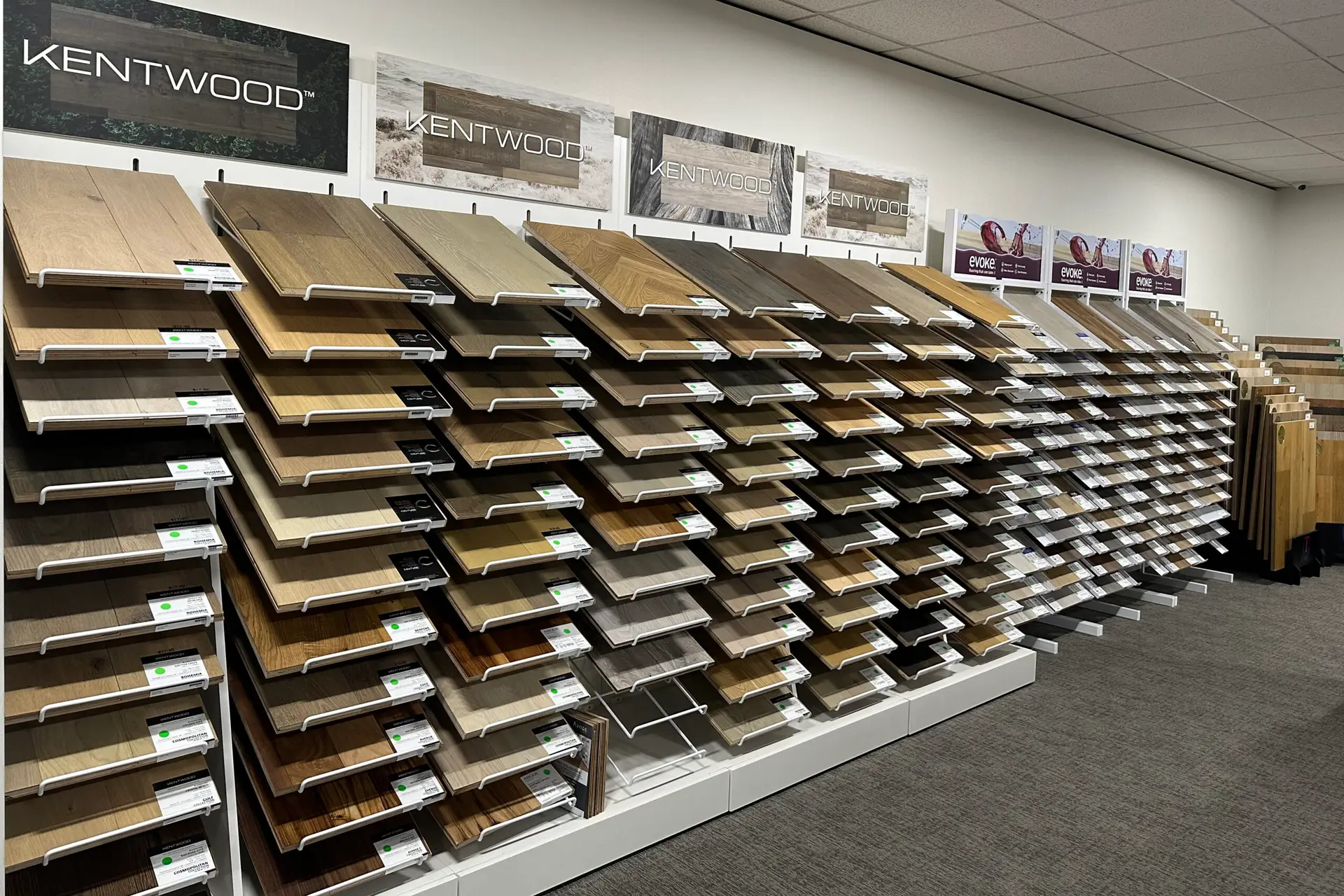
The fastest way to settle this decision is to stand on all three. Our Portland showroom has LVP, laminate, and hardwood displayed together so you can compare realism, texture, and feel directly — and our team will give you a straight recommendation for your specific rooms, subfloor, and budget rather than a one-size answer.
Stop in any time, or contact us to schedule a free in-home measurement and estimate.
Ready to Transform Your Floors?
Schedule an Appointment
Showroom Information