
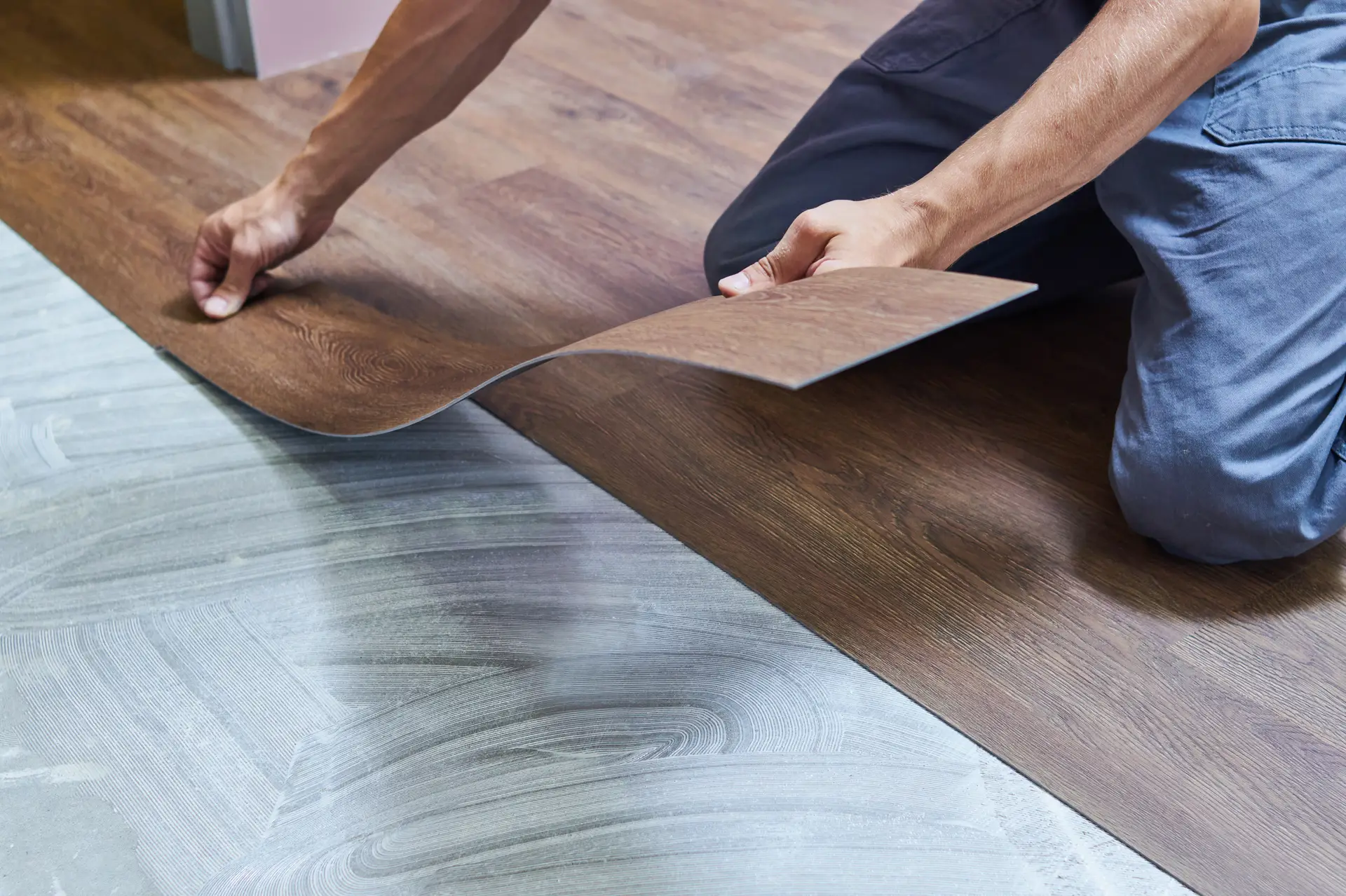
Luxury vinyl tile and plank flooring has become the fastest-growing category in the residential flooring market — and the reasons are hard to argue with. Modern LVT delivers the authentic look of hardwood or stone at a fraction of the cost, with waterproof performance that natural materials simply can’t match. Whether you’re renovating a kitchen, outfitting a basement, or refreshing every room in your home, LVT deserves serious consideration.
This guide covers everything you need to know: how LVT is constructed, the differences between product lines, and how to choose the right product for each room.
What Is LVT? Understanding the Construction
Luxury vinyl tile is a multi-layer synthetic flooring product engineered to replicate natural materials while delivering superior performance. A standard LVT product consists of four layers:
- Wear Layer: The top protective surface that resists scratches, scuffs, and stains. Measured in mils — thicker is better.
- Print Layer: A high-definition photographic image that replicates wood grain, stone, ceramic, or other materials with stunning realism.
- Core Layer: The structural heart of the plank or tile. This is where rigid-core and flexible-core products differ significantly.
- Underlayment/Backing: The bottom layer that provides cushion and helps with sound absorption. Some products include attached underlayment; others require a separate pad.
The Most Important Spec: Wear Layer Thickness
The wear layer is the most critical specification to evaluate when comparing LVT products. It’s measured in mils (thousandths of an inch), and thickness directly correlates with durability and the product’s useful lifespan.
- 6–8 mil: Entry-level residential use. Suitable for low-traffic rooms like bedrooms and guest rooms.
- 12 mil: Mid-grade residential. A good balance of durability and value for living rooms, dining rooms, and moderate-traffic kitchens.
- 20 mil: Premium residential and light commercial. Excellent choice for high-traffic areas, homes with pets, or any space that takes a beating.
- 28 mil and above: Heavy commercial or extreme residential applications.
For most family homes, a 12-mil wear layer is the minimum we recommend for main living areas. If you have large dogs or heavy foot traffic, step up to 20 mil without hesitation.
Rigid Core vs. Flexible LVT: Which Is Right for You?
This is the most significant product category decision you’ll make when shopping for LVT.
Flexible (Standard) LVT
Traditional LVT uses a flexible PVC core. It’s thinner, lighter, and less expensive. It can be glued down or floated and is suitable for flat, smooth subfloors. Significant subfloor imperfections will telegraph through flexible LVT over time.
Rigid Core: SPC vs. WPC
Rigid core LVT has largely replaced flexible products in the mid-to-premium market, and for good reason. There are two primary rigid core formats:
- SPC (Stone Plastic Composite): An extremely dense, dimensionally stable core made from limestone powder and PVC. SPC is 100% waterproof, highly resistant to temperature fluctuations, and suitable for installation over minor subfloor imperfections. It’s the preferred choice for kitchens, bathrooms, basements, and commercial spaces.
- WPC (Wood Plastic Composite): A softer, more cushioned rigid core with a slightly quieter, warmer feel underfoot. WPC is also waterproof and more comfortable for extended standing. It’s a great choice for living rooms and bedrooms where comfort is a priority.
LVT vs. LVP: Understanding the Format Difference
You’ll often see both LVT and LVP (Luxury Vinyl Plank) referenced. The only difference is format: LVT typically refers to tile-shaped products (great for replicating stone or ceramic looks), while LVP refers to plank-shaped products designed to mimic hardwood. Both use the same construction — the choice is purely aesthetic and depends on the look you’re trying to achieve.
Installation Methods: Float, Glue-Down, or Loose Lay
- Floating (Click-Lock): Planks or tiles click together using an interlocking edge system. No adhesive required. Fast installation and suitable for DIY. The most common method for rigid core products.
- Glue-Down: Adhesive is applied to the subfloor and tiles are pressed down. More permanent and provides the flattest, most stable result. Often used in commercial settings or with flexible LVT.
- Loose Lay: Heavy vinyl tiles with a textured backing that grip the subfloor without adhesive. Easy to replace individual tiles and popular in commercial environments.
Is LVT Really Waterproof?
100% waterproof — the plank or tile itself won’t absorb water or swell. However, “waterproof flooring” doesn’t mean water can never damage your floor. If standing water penetrates the seams and sits on a wood subfloor for extended periods, the subfloor itself can be damaged. For wet areas like bathrooms, ensure seams are properly sealed and transitions are handled correctly during installation.
Room-by-Room LVT Recommendations
- Kitchens: SPC rigid core, 20 mil wear layer. Waterproof, handles grease splatter and spills. Plank format in a wood-look finish is currently the most popular choice.
- Bathrooms: SPC rigid core with sealed seams. Tile-format LVT in a stone or marble look creates a high-end appearance at a practical price.
- Basements: SPC is ideal — dimensionally stable with temperature swings and fully waterproof for below-grade applications.
- Living Rooms & Bedrooms: WPC for extra cushion and comfort. A wide-plank wood-look format creates a warm, stylish aesthetic.
- Entryways & Mudrooms: Maximum wear layer (20 mil+). High-traffic zones need the toughest product on the market.
LVT Maintenance: One of Its Greatest Advantages
LVT is one of the easiest flooring types to maintain. Regular sweeping or dry mopping removes everyday dirt and debris. Damp mopping with a pH-neutral cleaner handles deeper cleaning. Avoid steam mops — the heat can damage the wear layer and adhesive over time. Area rugs at entry points significantly extend the life of any LVT floor by capturing grit before it can scratch the surface.
Visit Trinity Flooring to See LVT in Person
Photographs don’t do modern LVT justice — the realism has to be seen and felt in person. Our Portland showroom carries an extensive selection of rigid core LVT from leading brands, with samples you can hold, compare, and take home. Our team can help you identify the right wear layer, core type, and format for every room in your project.
Contact us today to schedule a free estimate, or stop in during showroom hours to explore the full collection.